Motor Intelligence: the S.A.M v3 sensor and AI that prevent electrical motor failure
Electrical motors drive nearly every process in a plant, and when one fails without warning the loss is rarely the motor — it is the shift. KLVIN builds patented full-stack AI for electrical motors, part of KLVIN's broader Industrial AI platform for predictive maintenance across manufacturing. The S.A.M v3 sensor measures current, vibration and temperature at the machine, models fuse those signals at the edge, and the SENTINEL platform turns them into a single health verdict with a recommended action.
This page covers both the product and the science — the S.A.M v3 hardware, the failure modes it detects, the diagnostic methods behind the prediction, and how KLVIN deploys it on operating plants and motor manufacturing lines.
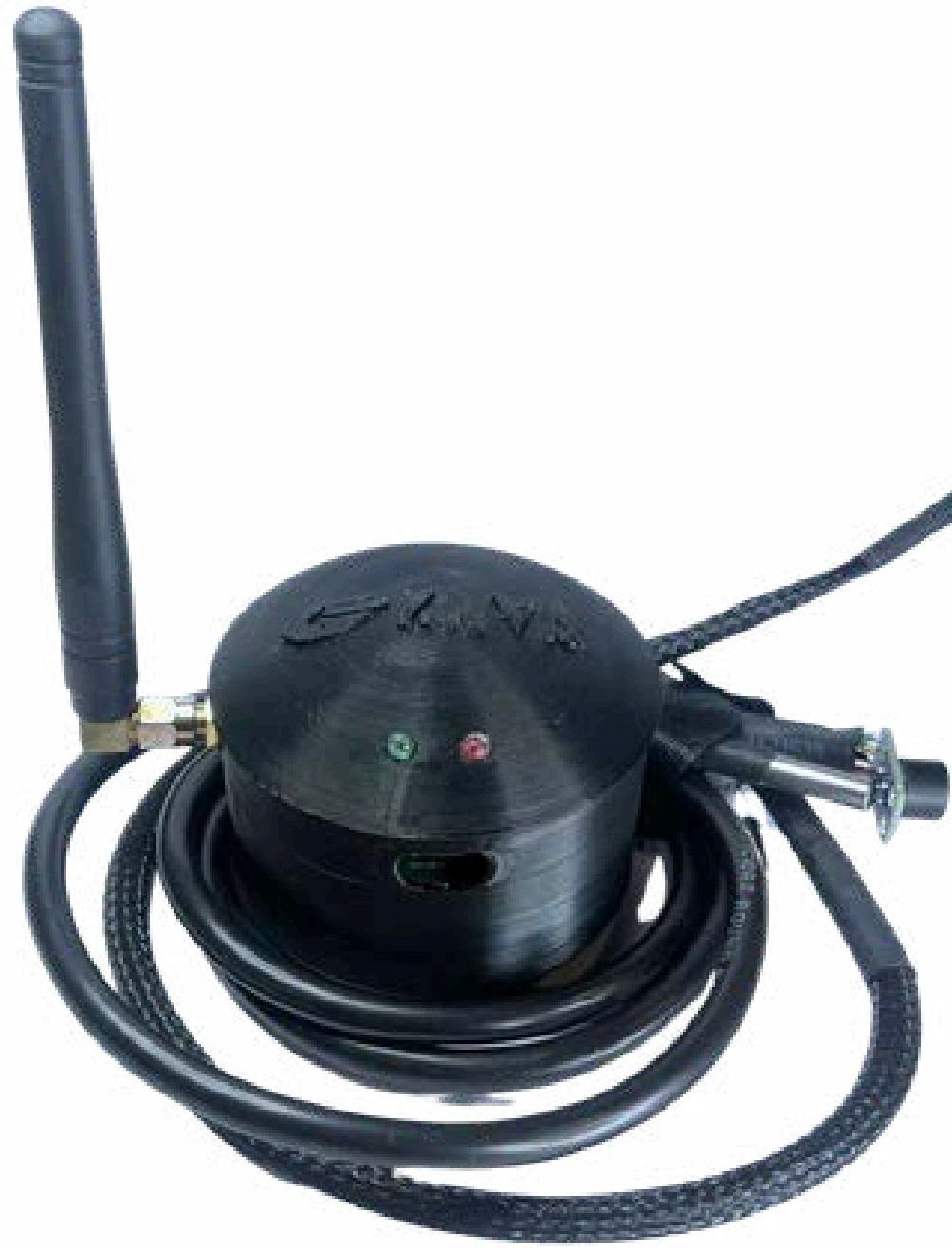
S.A.M v3 — the motor monitoring sensor
S.A.M v3 is purpose-built for electrical motors and the equipment they drive — pumps, compressors, fans, gearboxes and conveyors. It captures vibration, temperature, current and voltage at the machine, runs failure-prediction models at the edge, and streams asset health to the SENTINEL platform, so a developing bearing or winding fault becomes a planned repair instead of a line stoppage.
- Motor Current Signature Analysis (MCSA) — Current and voltage waveform analysis detects rotor bar defects, eccentricity, phase imbalance and electrical faults that vibration alone cannot see.
- ISO 10816 Vibration Severity — Triaxial vibration measured and classified against ISO 10816 severity zones, so alarm thresholds match the machine class rather than arbitrary limits.
- Winding Insulation Life Modelling — Arrhenius-based thermal modelling converts winding temperature history into insulation ageing and remaining useful life for the motor.
- Edge Failure Prediction — Models run on-device to flag bearing wear, imbalance, misalignment and looseness days to weeks before failure — no cloud round trip needed.
- Easy Installation — Magnetic mounting deploys in minutes — no machine shutdown, no wiring, no commissioning crew.
Patented, and built end to end
KLVIN holds a granted patent in India covering its method for predicting electrical motor failure across the full stack — multi-parameter sensing at the machine, on-device signal processing, and AI models that combine electrical, mechanical and thermal evidence into one motor health verdict.
The practical consequence is that KLVIN owns every layer between the motor and the decision. The sensor, the edge intelligence and the SENTINEL platform are designed together, so diagnostics are not limited by what a generic third-party sensor happens to expose.
One vendor, whole stack
Hardware, edge AI and platform built and supported by the same team.
Designed for motors
Not a general vibration logger repurposed — the diagnostics target motor failure physics.
Defensible diagnostics
Grounded in MCSA and ISO 10816, so results stand up in a reliability review.
The motor failure modes AI can see
Different failures announce themselves in different physical signals. This is why single-parameter monitoring misses so much — and what a fused approach covers.
Bearing degradation
The single most common motor failure mode. Spalling, lubrication breakdown and raceway wear produce characteristic vibration signatures long before audible noise or heat appear.
Winding insulation ageing
Insulation life halves for roughly every 10°C of sustained overtemperature. Continuous winding temperature history turns that chemistry into a usable remaining-life estimate.
Rotor bar and eccentricity faults
Broken rotor bars and air-gap eccentricity appear as sidebands in the current spectrum — invisible to vibration-only monitoring until the damage is advanced.
Supply and load-side faults
Phase imbalance, undervoltage and overload conditions quietly shorten motor life. Detecting them is often the cheapest reliability win in the plant.
Misalignment and imbalance
Installation and coupling errors load bearings far beyond design intent. ISO 10816 severity classification separates a tolerable condition from one that is consuming asset life.
Looseness and structural faults
Soft foot, loose base bolts and structural resonance amplify every other fault mode and are routinely missed by periodic handheld routes.
Motors and motor-driven equipment KLVIN monitors
Electrical motor condition monitoring with S.A.M v3 applies across voltage classes, frame sizes and driven equipment — in operating plants and on motor manufacturing lines.
LV and HV induction motors
Squirrel-cage and slip-ring induction motors from fractional-kW drives to multi-MW HV machines. Motor current signature analysis reads rotor bar, eccentricity and supply faults regardless of frame size or voltage class.
Pump motors
Centrifugal, positive-displacement and slurry pump motors, where cavitation, dry running and seal wear load the motor bearings and show up first in vibration and current draw.
Compressor drive motors
Screw, reciprocating and centrifugal air and gas compressor motors, monitored for bearing wear, valve-induced load pulsation and thermal overload during high duty cycles.
Fan and blower motors
ID, FD and process fan motors, where blade fouling, imbalance and belt or coupling misalignment quietly raise vibration severity and shorten motor bearing life.
Conveyor, crusher and mill drives
Gearbox-coupled motor drive trains under shock loading, where overload events and gear-mesh faults are detected as current transients and vibration harmonics.
Motor manufacturing end-of-line
New motors tested at the end of the line for winding, bearing and assembly defects, each unit leaving with a stored electrical and vibration signature baseline.
The methods behind the prediction
Motor AI is not a black box laid over sensor data. It is established diagnostic engineering, automated and run continuously on every motor instead of a handful during a quarterly route.
Motor Current Signature Analysis (MCSA)
Analysing the current and voltage waveform the motor already draws turns the motor itself into a sensor. MCSA surfaces rotor bar breakage, eccentricity, phase imbalance and supply quality problems that mechanical monitoring cannot reach.
ISO 10816 vibration severity
Vibration is classified against ISO 10816 severity zones for the machine class, so a 4 mm/s reading is judged correctly for the motor in question instead of against a generic threshold copied across the plant.
Arrhenius winding-insulation modelling
Insulation degradation follows a known thermal relationship. Continuous winding temperature history is integrated into an ageing model that estimates how much insulation life the motor has actually consumed.
Multi-sensor fusion
A verdict is only issued when electrical, mechanical and thermal evidence agree — which is what keeps false alarms low enough that plant teams keep trusting the alerts.
Predictive motor maintenance vs the alternatives
How much warning each maintenance strategy actually gives before an electrical motor breakdown.
Reactive (run to failure)
The motor is replaced after it stops. Cost is the unplanned downtime, emergency spares and collateral damage to the driven equipment, not the motor itself.
Preventive (time-based)
Motors are serviced or rewound on a schedule. Healthy motors are opened unnecessarily while degrading ones still fail between intervals, because time is not a condition signal.
Periodic route-based monitoring
A handheld vibration route covers a subset of motors a few times a year. Faults developing between routes — and every electrical fault the route does not measure — go unseen.
KLVIN predictive motor AI
Every instrumented motor is measured continuously across current, vibration and temperature, with AI fusing the evidence into a motor health score and a specific recommended action.
How KLVIN deploys motor AI
Sense at the motor. Reason at the edge. Decide in the platform.
Sense at the motor
S.A.M v3 mounts magnetically on the motor and captures triaxial vibration, current, voltage and temperature continuously — no shutdown, no rewiring, no commissioning crew.
Reason at the edge
Signal processing and failure-prediction models run on-device, fusing electrical, vibration and thermal evidence rather than treating them as separate alarm channels.
Decide in SENTINEL
The SENTINEL platform aggregates every motor into health scores, remaining-useful-life estimates and severity-tagged actions that route to technicians and CMMS work orders.
Two ways plants use motor AI
If you operate motors
Instrument your critical motors and stop discovering failures at the moment production halts. Early warning converts an emergency into a scheduled repair, with the spare part already on site.
Explore motor intelligenceIf you manufacture motors
Apply the same models at end-of-line testing. Catch winding, bearing and assembly defects before dispatch, and give every unit a stored signature baseline for warranty adjudication later.
Explore motor intelligenceMotor AI questions, answered
What is motor AI?
Motor AI is the use of machine-learning models on continuous electrical, vibration and thermal data from an electrical motor to determine its health, identify the specific developing fault and estimate how long it has before failure. It differs from threshold alarming in that it learns the normal signature of each individual motor and detects deviation from it.
How far in advance can an electrical motor failure be predicted?
For bearing and mechanical faults, typically 7 to 21 days of usable warning — enough to source a spare and schedule the intervention into planned downtime. Thermal and insulation ageing is a slower process and is reported as a trend over months. Some electrical faults, such as sudden phase loss, are detected immediately rather than predicted.
What is motor current signature analysis and why does it matter?
Motor current signature analysis (MCSA) examines the frequency spectrum of the current the motor already draws. Faults such as broken rotor bars, air-gap eccentricity, phase imbalance and load-side anomalies modulate that current and appear as sidebands around the supply frequency. Because the motor becomes its own sensor, MCSA detects electrical faults that no external vibration sensor can observe.
Is vibration monitoring enough on its own?
No. Vibration is excellent for mechanical faults but blind to a large class of electrical and thermal failure modes. A motor with a cracked rotor bar or degrading winding insulation can pass a vibration route repeatedly and still fail. Combining current signature analysis and thermal modelling with vibration is what closes that gap.
What is a motor health score and how is it calculated?
The motor health score is a single 0–100 index computed in SENTINEL from the fused evidence — ISO 10816 vibration severity zone, current spectrum indicators, winding temperature and consumed insulation life, and how far each has drifted from that motor's own learned baseline. A falling score is always traceable to the specific parameter driving it, so maintenance teams see the reason, not just the number.
Can old motors be retrofitted with condition monitoring?
Yes. S.A.M v3 mounts magnetically on the motor housing while the machine runs, and the electrical measurement is taken at the panel, so ageing motors with no built-in instrumentation are covered exactly like new ones. Older motors usually deliver the fastest payback because they are closest to failure.
How does predictive motor maintenance compare with preventive maintenance?
Preventive maintenance services motors on a calendar, which both over-maintains healthy machines and misses faults that develop between intervals. Predictive motor maintenance acts on measured condition, so work is scheduled only when a real fault is developing and each intervention is targeted at the diagnosed cause.
What makes KLVIN's approach patented and full-stack?
KLVIN holds a granted patent in India (Patent 566486) covering its method of predicting electrical motor failure across the full stack — sensing multiple physical parameters at the machine, processing them on the device, and fusing the results into a single AI-derived motor health verdict. Full-stack means KLVIN builds the sensor hardware, the edge intelligence and the SENTINEL platform, rather than integrating third-party parts.
How quickly can this be deployed on an operating plant?
A pilot on 10 to 20 critical motors typically goes live in two to four weeks. Sensors mount magnetically while machines run, and SENTINEL is cloud-hosted, so there is no on-premise installation to schedule.
Does it work on motors of any size and voltage class?
The approach applies across LV and HV induction motors from small pump drives to large fan and mill drives. What changes is the mounting arrangement and how the electrical measurement is taken; the diagnostic methods are the same.
Find out what your motors are about to do
Start with a pilot on your most critical motors. Assessment is free, installation needs no shutdown, and you see real health data within weeks.
Backed by Industry & Academia